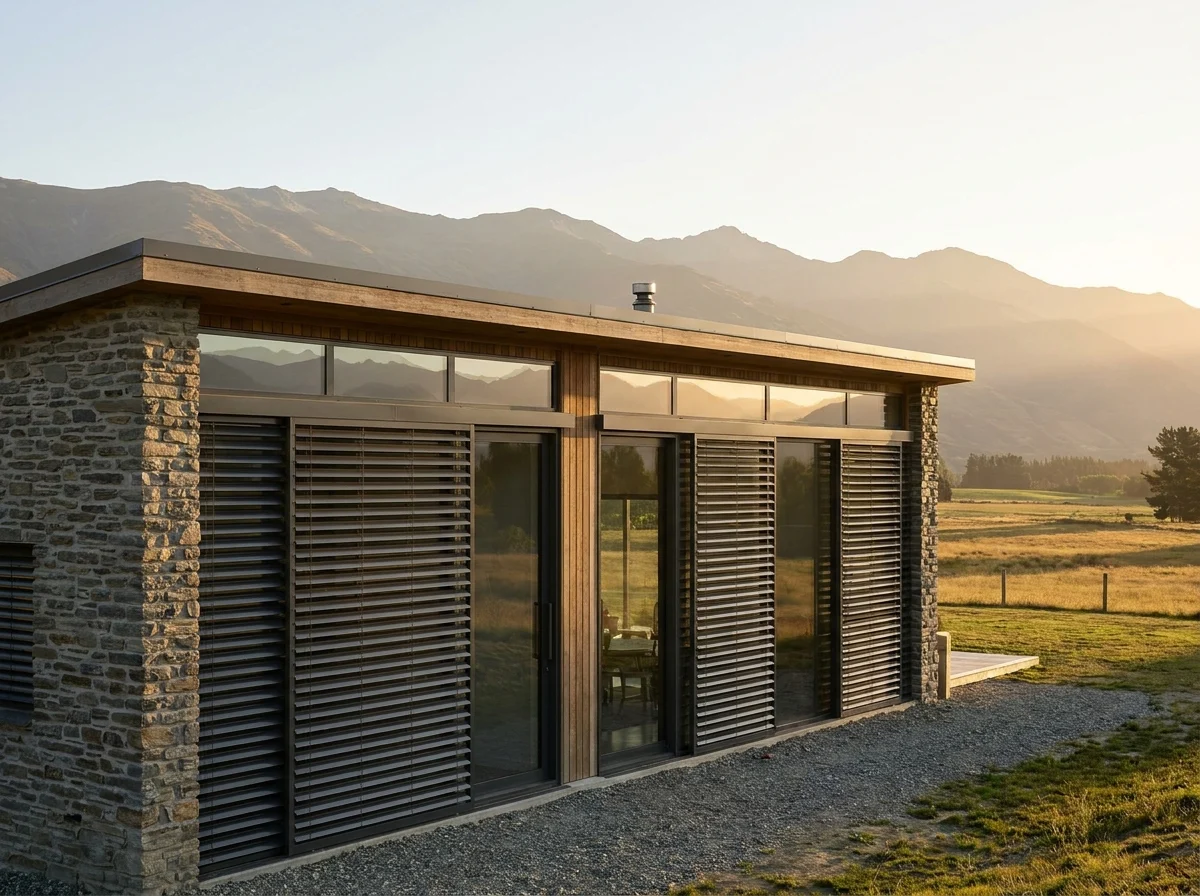
An indoor blind manages heat that has already got into the room. An external venetian intercepts most of it before it ever crosses the glass — the difference is dramatic on a hard west or north elevation. In a valley that holds its heat later into the evening than a coastal site, that head start matters more than it would somewhere with a daily sea breeze doing some of the work for free.
This is a premium spend and a visible change to the facade — not a product to add quietly after the fact if the look of the house matters to you. It's not a DIY or budget item, and it needs a proper wind-rated motor and sensor to earn its keep here. We'll say plainly at the measure if a window is better served by an indoor sunscreen roller instead.
New wine-estate builds around Groot Drakenstein and the open, less-sheltered farmhouses of Simonsvlei are the two places we fit these most — both run wide glass toward the vines with little natural shading from trees or neighbouring buildings, which is exactly the situation external venetians are built for.
External shading costs more than anything else we fit, and a figure serves you better than an adjective. As a rate for a square metre fitted and working: R3,000 to R4,500 in a manual configuration, R4,500 to R6,500 motorised with a wind sensor. Out on a valley elevation it is nearly always the second rate, because a blind that cannot take itself in ahead of a gust becomes a repair bill.
Guide rails, a headbox and a facade assessment are required whatever the size of the glass, so small openings carry a minimum. Use the rates to see whether the idea belongs in the budget at all; the elevation is assessed and each opening priced on paper after the free measure.
Ready when you are
Send the form and one of our expert consultants will contact you shortly to arrange your free in-home measure.
Request my call-back →